Corporate websites
How to plan a contracting or technical-services website.
Build a clear page plan around the company’s services, project evidence and the questions prospective clients ask.
The short answer
Start with a clear brief.
Start with the services your business actually provides, the customers you want to reach and the project information you can show. Build the page plan around those facts, then agree the language versions, content responsibilities and enquiry route before design begins.
Write a short business and audience brief.
A visitor should be able to understand the kind of work your company takes on and whether it is relevant to their requirement. List the main services, sectors and areas served, then describe your intended buyers and the information they need before making contact.
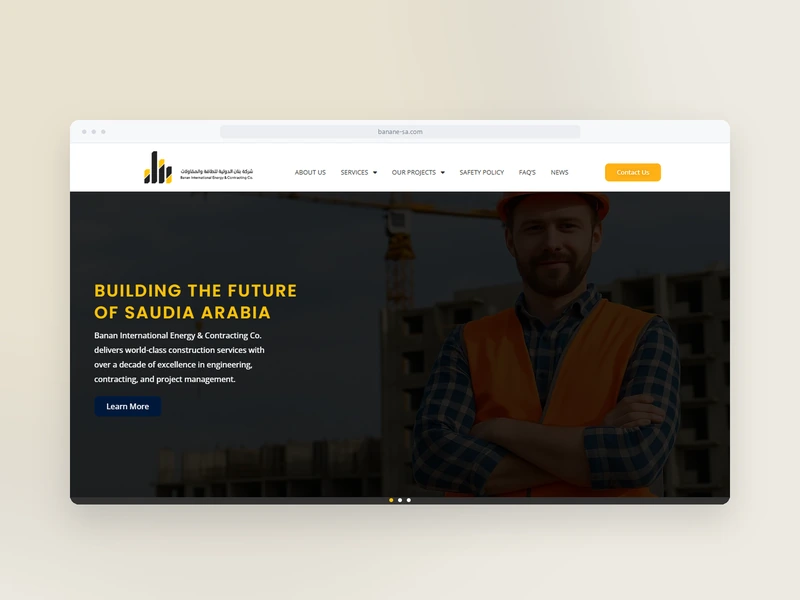
Your website brief can be simple: the company, the work you offer, the audience, the available evidence and the next step. Belstack wanted a digital presence with basic SEO. Banan wanted to showcase its company work and profile. Those confirmed briefs explain the purpose of the website before any page layout is discussed.
Choose pages that answer real buyer questions.
Use this as an initial structure, then adjust it to your actual content and services.
| Page | What it helps the visitor understand |
|---|---|
| Home | What the business does, who it serves and where to go next. |
| Company | The company introduction, relevant capabilities and factual background. |
| Services | Each main service, the type of requirement it addresses and its scope. |
| Projects | Selected work with useful images, context and the company’s role. |
| Contact | How to enquire and which information helps your team respond. |
An FAQ, client list or credentials section can be useful when you have relevant, current material. Avoid adding pages whose content is still a placeholder. For a broad service offer, distinct service pages can be easier to explore than one long, unstructured list.
Make the project gallery useful.
A collection of photographs is more informative when each example explains what the company did. Prepare short descriptions that identify the project type, relevant scope and the role your business performed. Choose images that illustrate the description and use clear captions.
Keep the website agency’s contribution separate from the contractor’s project work. Our Banan case study describes website design and company presentation; the client’s construction work is the subject presented by the site. That distinction helps readers understand whose work they are looking at.
- Choose a small set of relevant projects rather than adding every image available.
- Prepare a factual title and a short scope description for each example.
- Identify the company’s role and use only information approved for publication.
- Provide original images and captions that match the work being described.
Explain the offer in practical language.
Group related services and give each group a clear heading. Explain what the company offers and what a prospective customer should share when enquiring. Technical terms can remain where they are useful, but the page should still help someone understand the overall service.
In the supplied Belstack views, the homepage introduces fire safety, construction, MEP work and low-current systems, with service content and a separate gallery. The case study shows the original page views and our role in creating the company’s digital presence.
Plan languages, mobile use and search foundations.
Choose Arabic, English or both according to the audience you want to serve. Agree who supplies and approves the content in each language. When both are included, check the navigation, service descriptions, project content and enquiry journey in each version.
Visitors should be able to read the pages, use the menu and reach contact information on a phone. Ask for the agreed layouts and main interactions to be tested before launch. If your scope includes SEO foundations, clarify the titles, descriptions, heading structure, crawl access and sitemap work involved. Ongoing search research and content need their own scope.
Define what happens after someone enquires.
Choose a visible business contact route and agree who will receive and respond to enquiries. A brief form can ask for the company, service required and project information your team needs. Additional details should have a clear purpose; optional timing or budget can help without being a substitute for a conversation.
Test the complete route to the intended inbox or contact channel before launch, including any error and confirmation messages. Assign someone to review enquiries, qualify opportunities and track later proposals and contracts.
Bring these items to the project discussion.
This checklist helps turn the initial idea into an actionable website brief.
- The company introduction, actual services, sectors and areas served.
- A proposed page list and the main action visitors should take.
- Selected projects with approved descriptions, images and captions.
- Brand files and available Arabic or English content, with a review owner.
- The receiving contact channel and the person responsible for replies.
- Existing website links, access requirements and any editing or integration needs.
- Who will handle updates, new project entries and renewals after launch.
From our delivered work
Belstack’s digital-presence brief
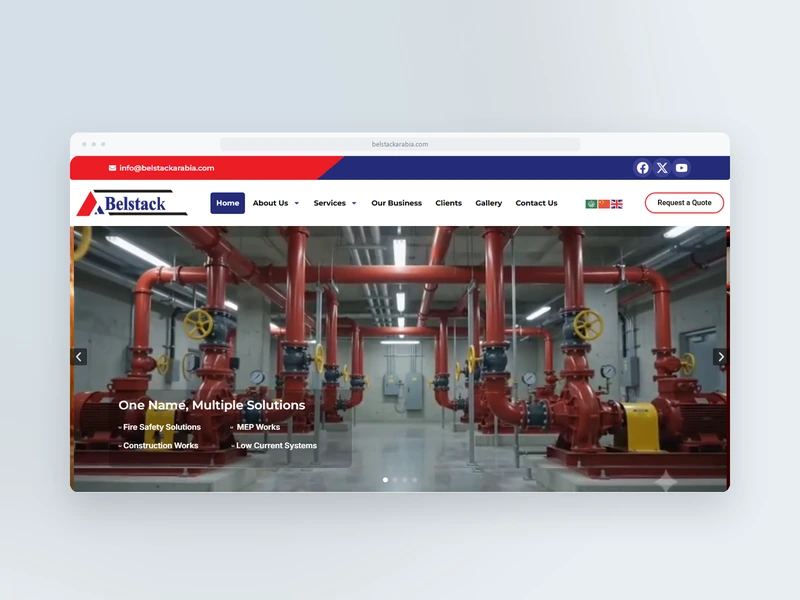
Belstack Arabia asked us to create its digital presence and complete basic SEO. The delivered website organises company information, service categories, project imagery and an enquiry route. Explore the case study to see the original page views and our contribution.
Explore the case studyCommon questions
Do we need to redesign our brand too?
Not automatically. Existing brand files can guide the site. Identity changes should be discussed as a separate part of the scope.
Can the project gallery be updated later?
Yes, plan who will maintain it and how. The agreed solution might include editing access or developer-managed updates; the handover should explain the chosen method.
Can booking or payment features be added later?
Discuss those plans early. Each feature needs a review of the platform, provider availability and implementation requirements before committing to a scope.
Your next step
Let’s plan your company website.
Tell us about your services, available project material and language needs. We can discuss the pages and enquiry route your business requires.