Website planning
What determines the cost of a company website?
Understand the scope behind a quote, compare proposals and prepare a useful website brief.
The short answer
Start with a clear brief.
A useful website quote starts with an agreed scope: what the site needs to do, which pages and languages it needs, who prepares the content and how it will be maintained. Two quotes are comparable only when those responsibilities and deliverables are clear.
Start with the job your website needs to do.
A company introduction, a project portfolio and a website with booking or payment features are different projects. Start by describing your audience and the next step you want visitors to take. That helps you choose the pages and functionality worth including.
For a Saudi business, decide whether you need Arabic, English or both, and which services, sectors and locations the website will actually cover. A focused first release can grow later, provided that future needs are discussed during planning.
The scope factors behind the price.
Ask the agency to explain how these items are treated in its proposal. A headline price alone does not tell you how much work is included.
- Pages and structure: a short company site differs from a site with separate service pages, case studies and a large project library.
- Content preparation: approved copy and usable images are different inputs from a brief that still needs writing, editing, translation or image preparation.
- Languages: Arabic and English require content for each version, suitable layouts and review of both journeys.
- Design scope: existing brand files can guide the website; a new identity or additional brand materials need their own scope.
- Features: enquiry forms, editing tools, booking, payments and third-party integrations each add requirements to review.
- Review and launch: revisions, access, testing, migration and handover should be defined rather than assumed.
Agree the bilingual workflow before quoting.
A bilingual website needs more than a language switch. Agree who supplies each language, who approves terminology and which pages are available in both languages. Navigation, buttons, forms and mobile layouts should be included in that discussion.
If you already have approved Arabic and English material, share it with the brief. If translation or writing is needed, ask for those responsibilities to be stated separately. This makes content readiness and review stages easier to plan.
Compare the same scope across proposals.
Use the following questions to compare quotes. Where one proposal leaves a question unanswered, request clarification before choosing a supplier.
| Quote item | What to confirm |
|---|---|
| Pages | Which pages, templates and project entries are included? |
| Content | Who supplies, writes, edits and approves text and images? |
| Languages | Which pages are bilingual, and who handles language review? |
| Features | What do forms, editing access and integrations actually include? |
| Launch | Who handles hosting access, existing URLs, testing and handover? |
| Running costs | Which renewals, licences, updates and support costs continue after launch? |
Prepare this information for a useful quote.
You do not need a finished specification to begin a conversation. A short, organised brief is enough to expose the main scope questions.
- Your company, audience and main reason for creating or replacing the website.
- The services, projects and company information you want to present.
- The expected pages and whether you need Arabic, English or both.
- Available brand files, approved text, images and existing website links.
- Required features and how often your team expects to update the site.
- Who will review the work, your preferred timing and a budget range if you have one.
Discuss the work after launch too.
Domain and hosting renewals, technical updates, backups and content changes can create ongoing work. Ask who owns each task, what access your team receives and how additional changes are quoted. Confirm the currency and any additional charges shown in the proposal.
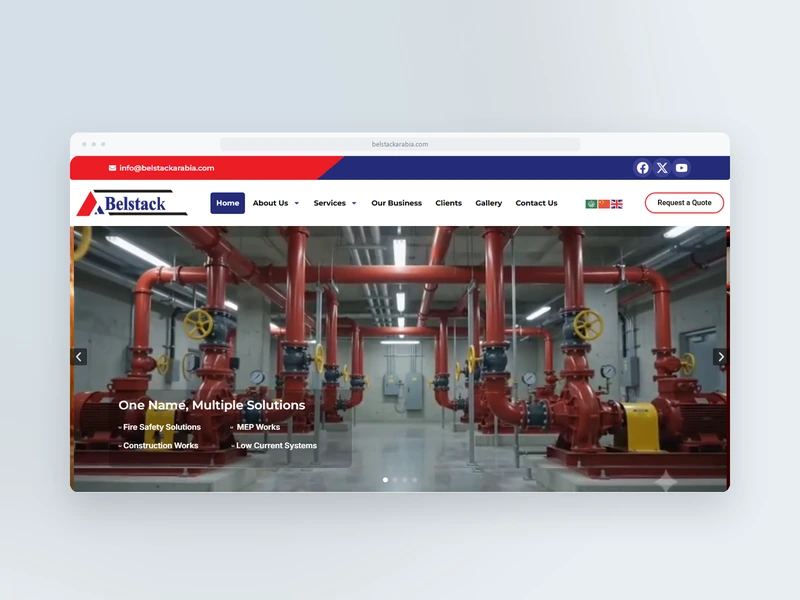
SEO also needs a defined scope. Ask which initial foundations are included and whether ongoing research, content and reporting are separate. Belstack’s client brief included a digital presence and basic SEO; Banan’s brief centred on showcasing its company and work. Those different aims are useful starting points for a scope discussion, without implying a published project price.
From our delivered work
A real company-showcase brief: Banan
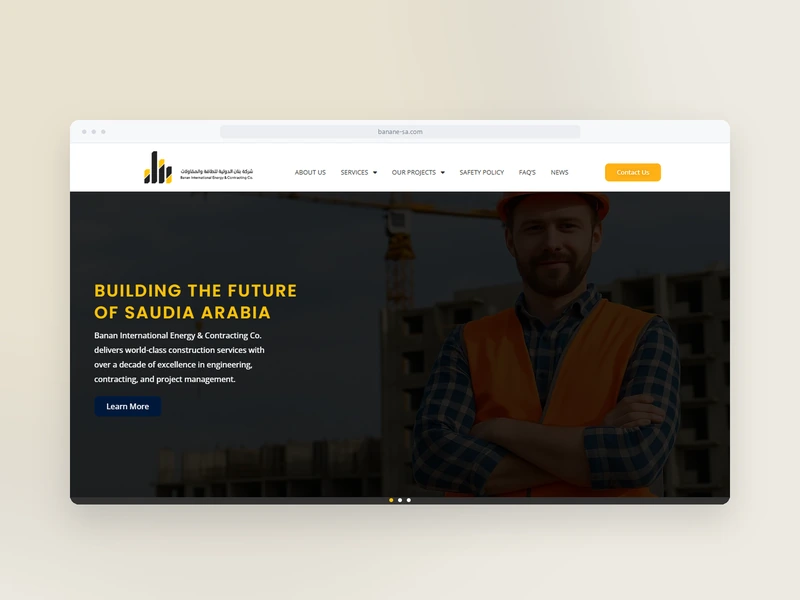
Banan asked us for a website to showcase its company work and profile. Our case study shows the company introduction, service structure and project presentation delivered for that purpose. Use it to discuss the kind of content your own website needs.
Explore the case studyCommon questions
Can we begin with a smaller website?
Yes, a focused scope can be discussed. Prioritise the pages and enquiry route your buyers need, and explain likely future features so the structure can take them into account.
Are hosting and ongoing SEO automatically included?
Ask for them to be specified. Hosting, renewals, initial SEO foundations and continuing SEO work are different responsibilities; the proposal should say which are included.
Is an English-only quote comparable to a bilingual one?
Only after you account for the extra content, layouts and review work. Compare the same pages, languages and delivery responsibilities.
Your next step
Ready to define your website scope?
Share your business, expected pages and language needs. We can discuss a practical scope before preparing a proposal.